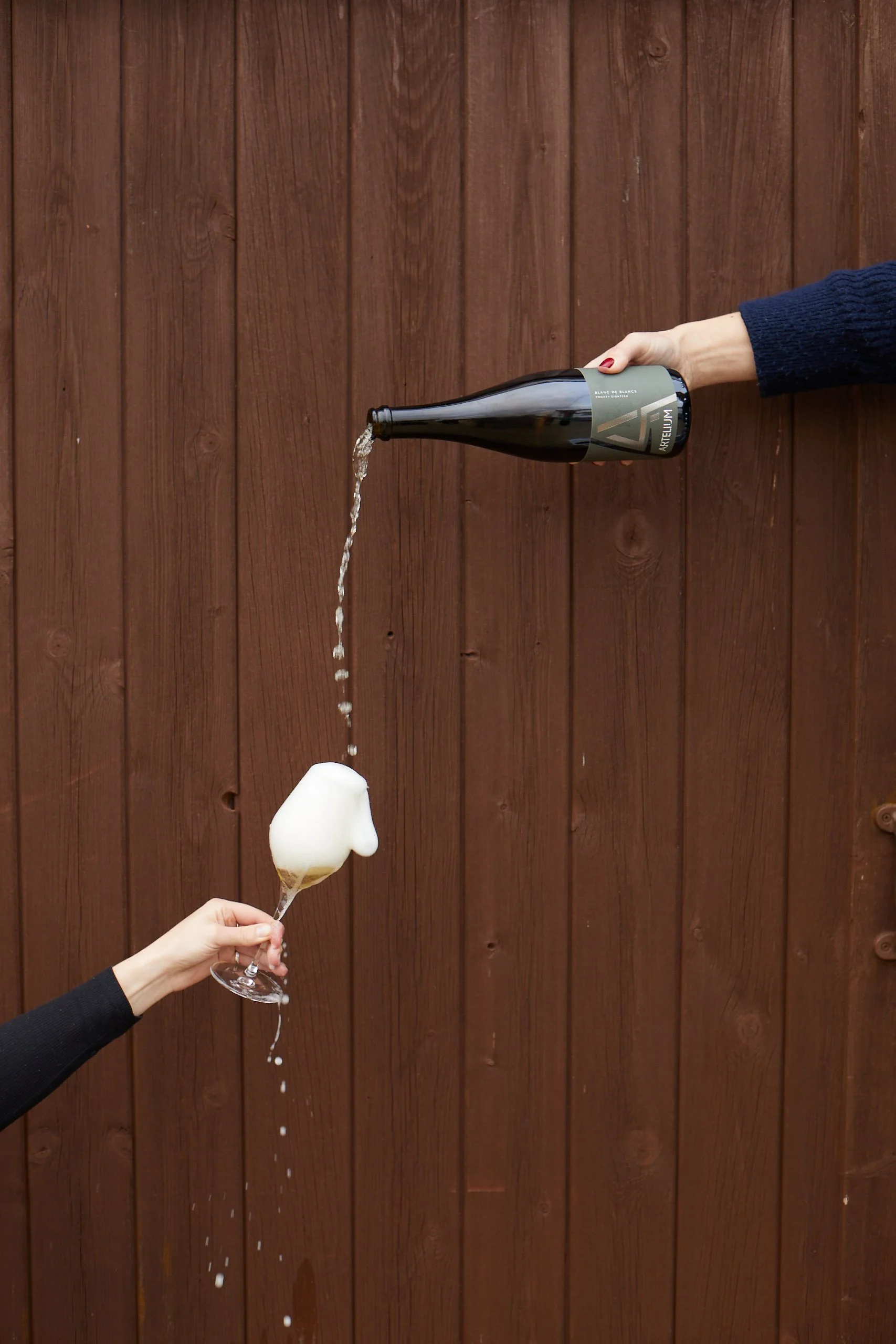
The Sussex Wine Region Explained

Artelium Vineyard, Streat, East Sussex
A Guide to the Sussex Wine Region
If English wine has a spiritual home, it is difficult to look beyond Sussex. Across East and West Sussex, vineyards now sit among chalk downs, clay soils, greensand slopes, wooded valleys and coastal landscapes. Together, they are producing an increasingly diverse range of sparkling and still wines, while building one of Britain’s most compelling food, culture and travel destinations.
What makes Sussex special is not one simple ingredient. It is the concentration of vineyards, the variety of sites, the experience of its growers and winemakers, and the way wine connects so naturally with the county’s landscape, food, art and independent spirit.
At Artelium, that relationship between wine, art and nature is central to how we see the region. Sussex is not simply where our vines happen to grow. It shapes the wines we make and the experience we want to share.
Where is the Sussex Wine Region?
The protected Sussex wine area is defined by East Sussex and West Sussex. It includes much of the South Downs landscape, while the wider wine-tourism story stretches from the Chichester area in the west, across the Downs and around Lewes, through the High Weald and towards Rye in the east.
This breadth matters. Sussex should not be imagined as a single slope or soil type. It is a collection of sites, each with its own exposure, elevation, drainage, shelter and farming history. The county’s identity comes from that diversity as much as from any one geological feature.

Artelium Chardonnay 2023
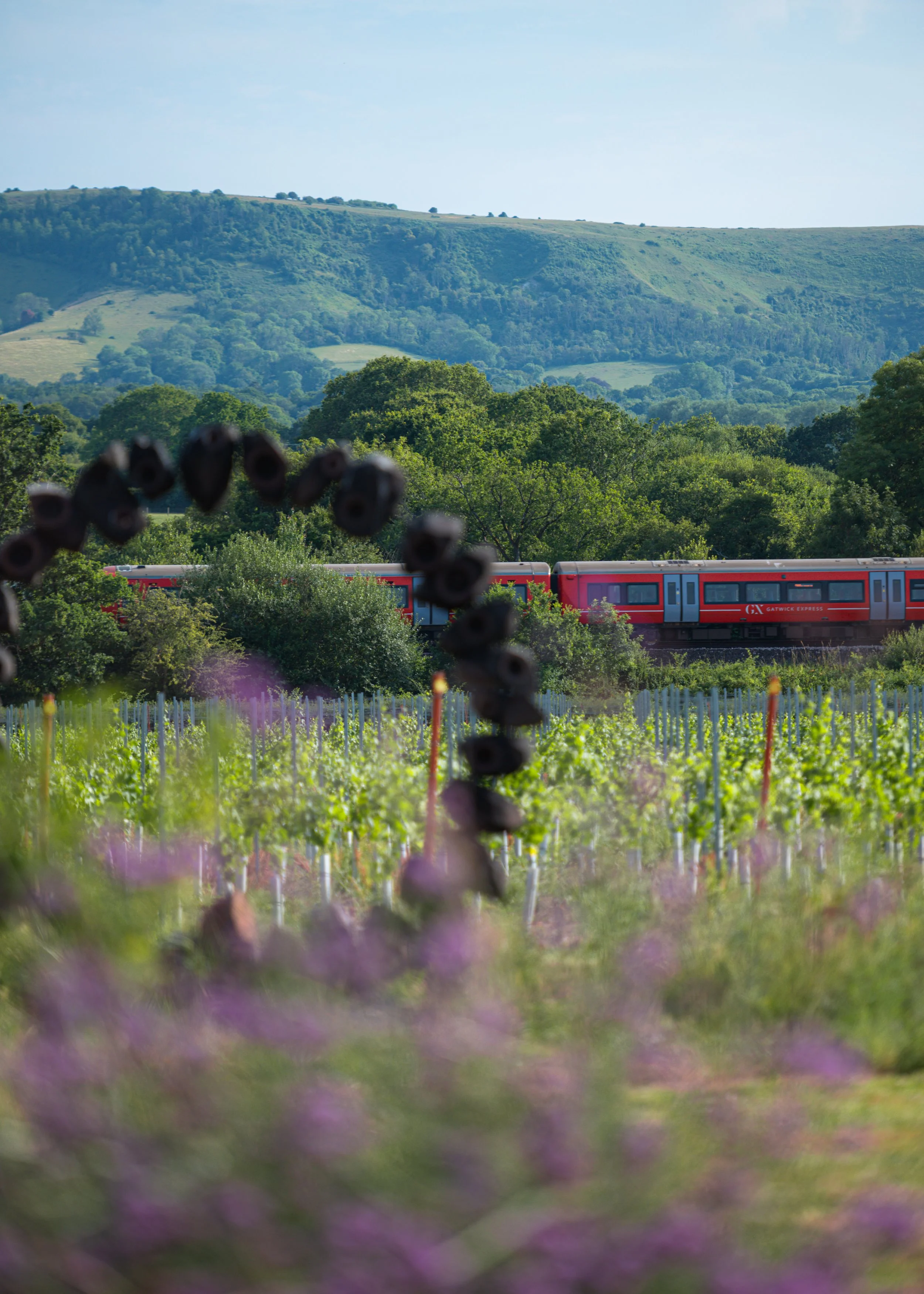
Street Vineyard as seen from Artelium terrace
Why Is Sussex Good for Growing Grapes?
A cool climate with useful freshness
Sussex remains a cool-climate wine region. That brings risk and vintage variation, but it can also help grapes retain acidity as flavours develop. This balance is particularly valuable for traditional-method sparkling wine and can bring energy and precision to still wines.
The influence of the coast
The English Channel forms Sussex’s southern boundary. Coastal influence, air movement and local exposure vary between sites, but the wider maritime setting is an important part of the region’s climate and identity.
Chalk, clay, greensand and more
The South Downs chalk is the most famous part of the Sussex geology story. Chalk can offer free drainage and encourage deep rooting, and it is strongly associated with several of the county’s leading sparkling-wine sites.
But Sussex wine is not only a chalk story. Clay, clay loam, sandstone, greensand and mixed soils support a wider range of varieties and styles. This is one reason Sussex can produce not only sparkling wine, but increasingly confident still whites, rosés and reds.
Slopes, aspect and individual sites
A vineyard’s slope, orientation and shelter can affect sunlight, air flow, frost exposure and ripening. In a marginal climate, these local differences matter. Two sites within the same county can behave very differently during the same growing season.

Artelium Curators Cuvée 2019
What Is the Sussex PDO?
PDO stands for Protected Designation of Origin. It is a form of geographical protection that links an eligible product to a defined place and production standard. The protected name Sussex was registered under the UK scheme on 5 July 2022.
The official Sussex specification defines the geographical area as East and West Sussex. The scheme is intended to protect provenance and set requirements around origin and production. WineGB manages wine-scheme applications and states that PDO and PGI schemes provide assurance of origin, authenticity and adherence to defined standards.
IMPORTANT DISTINCTION: A wine made in Sussex is not automatically a Sussex PDO wine. The producer must choose to apply, and the wine must meet the relevant scheme requirements and assessment.
Current WineGB public guidance lists Sussex Sparkling Wine PDO among the registered UK schemes. Because scheme wording and guidance can be updated, producers and publishers should check the current government registration and WineGB rules before making a technical claim about a particular wine.
What Does the Sussex PDO Mean for a Wine Drinker?
· A protected geographical name with a defined Sussex origin.
· A wine made under the relevant scheme rules rather than simply using Sussex as a loose marketing description.
· Analytical and sensory assessment as part of the applicable quality-wine process.
· An additional provenance signal, while recognising that many excellent Sussex wines may be sold under other permitted classifications.
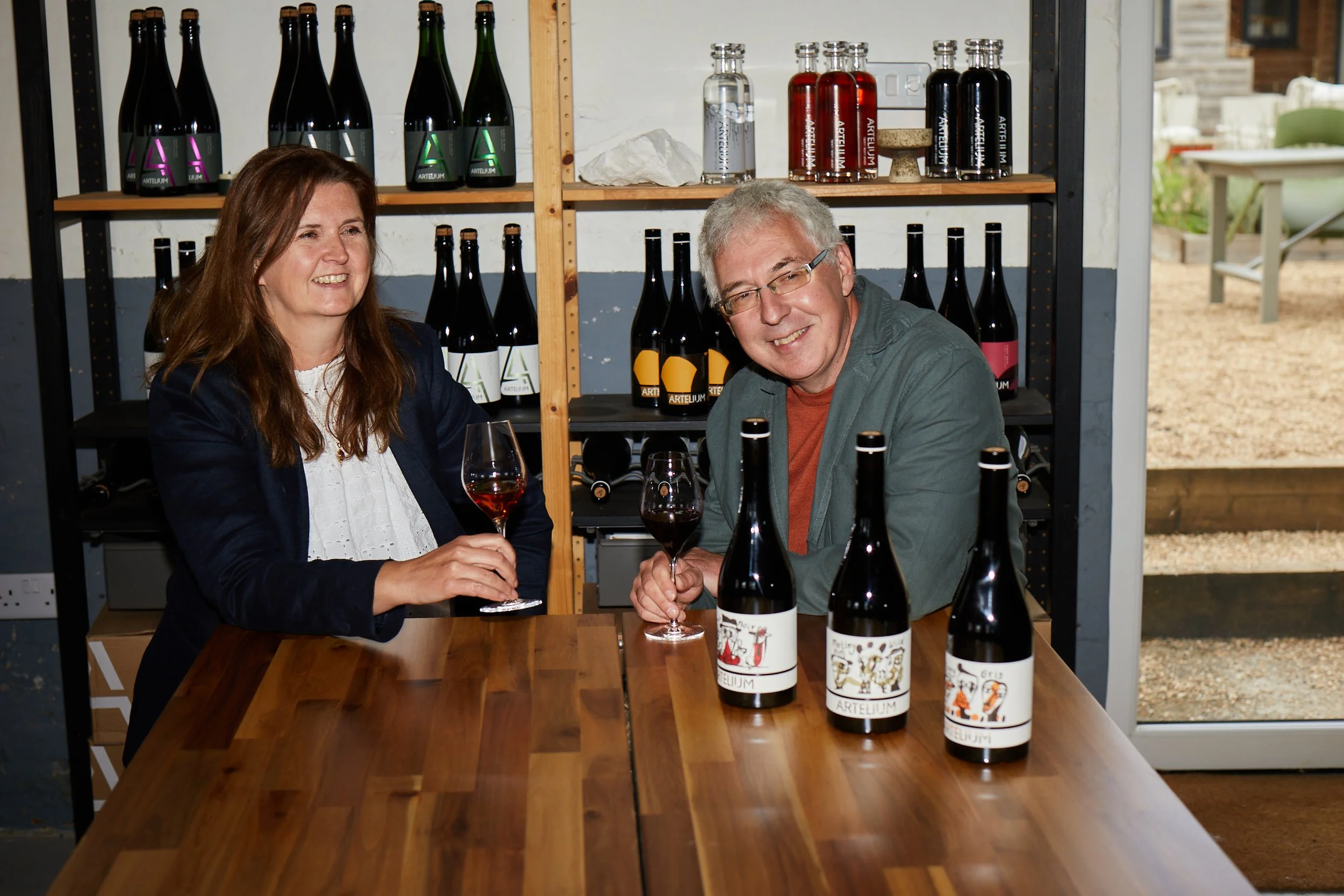
Artelium co-founders Julie Bretland & Mark Collins with Artefact range still wines
Is Sussex Wine Only Sparkling?
No. Sparkling wine established much of Sussex’s international reputation, but it is only part of the regional story.
Sussex sparkling wine
Many Sussex sparkling wines are made by the traditional method, with a second fermentation in bottle and time ageing on the lees. Chardonnay, Pinot Noir and Meunier are central to the category, producing classic cuvées, rosé, Blanc de Blancs and Blanc de Noirs styles.
Sussex white wine
Still white wines include Chardonnay, Pinot Gris, Bacchus and less familiar grapes. Styles range from crisp and aromatic to barrel-aged and textural.
Sussex rosé
Rosé may be still or sparkling, pale and delicate or more structured. Pinot Noir and Meunier are important, but style depends on vineyard, variety, season and method.
Sussex red wine
Red wine remains vintage-sensitive, but it is an increasingly serious part of the conversation. Pinot Noir, Meunier and modern disease-resistant varieties are giving growers and winemakers new possibilities for fragrant, savoury and more structured styles.
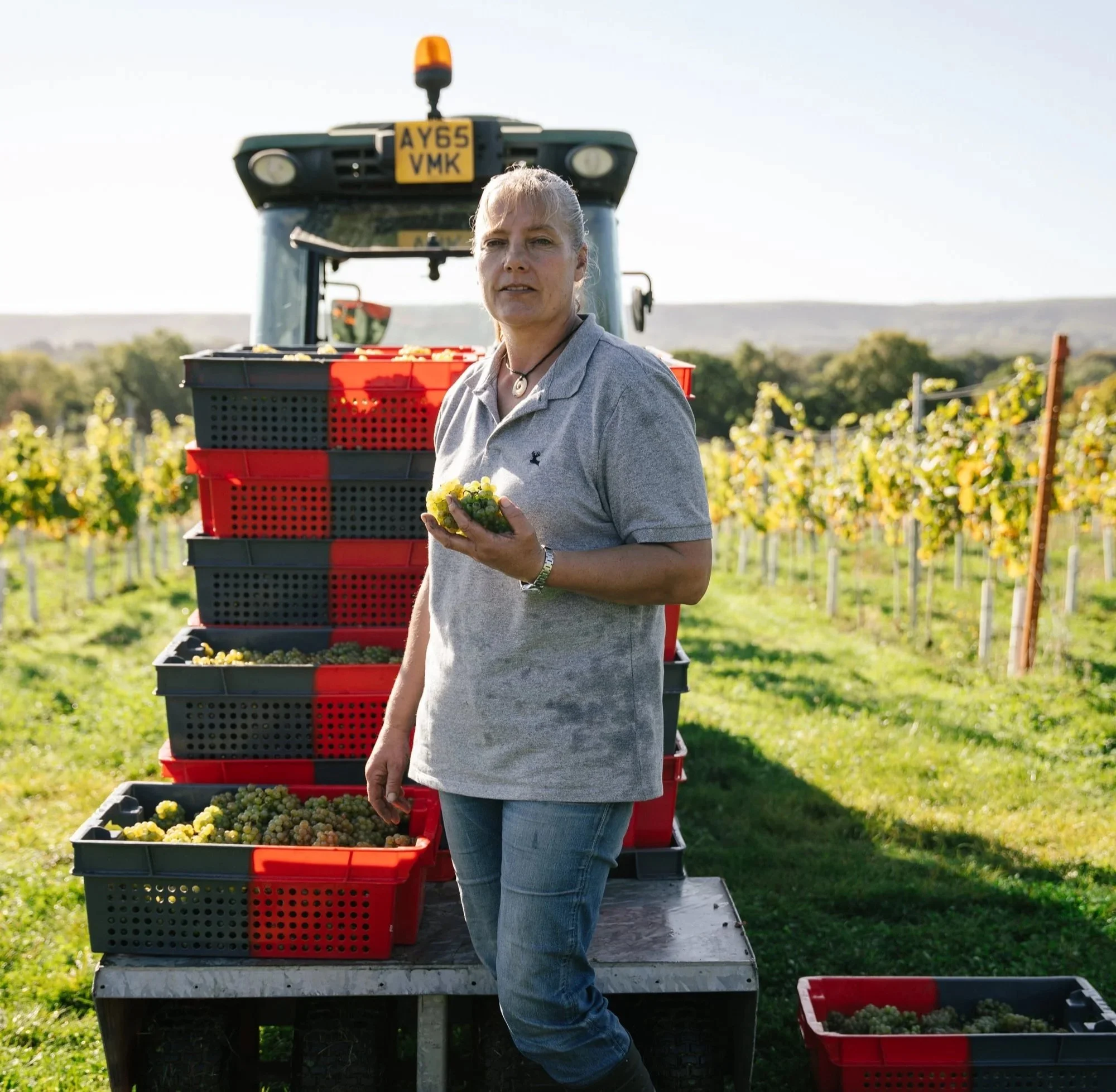
Sue Osgood, Vineyard Manager at Artelium
The People Behind Sussex Wine
Geology and climate matter, but they do not make wine alone. Sussex has attracted farmers, viticulturists, winemakers, chefs, investors, artists and hospitality teams willing to build a modern regional identity almost from the ground up.
There is no single Sussex model. Some estates grow and make their own wine. Some growers sell fruit. Some wineries make wine for several vineyards. Some destinations combine wine with restaurants, accommodation, art or events. That variety makes the region more interesting and helps visitors encounter wine in different ways.
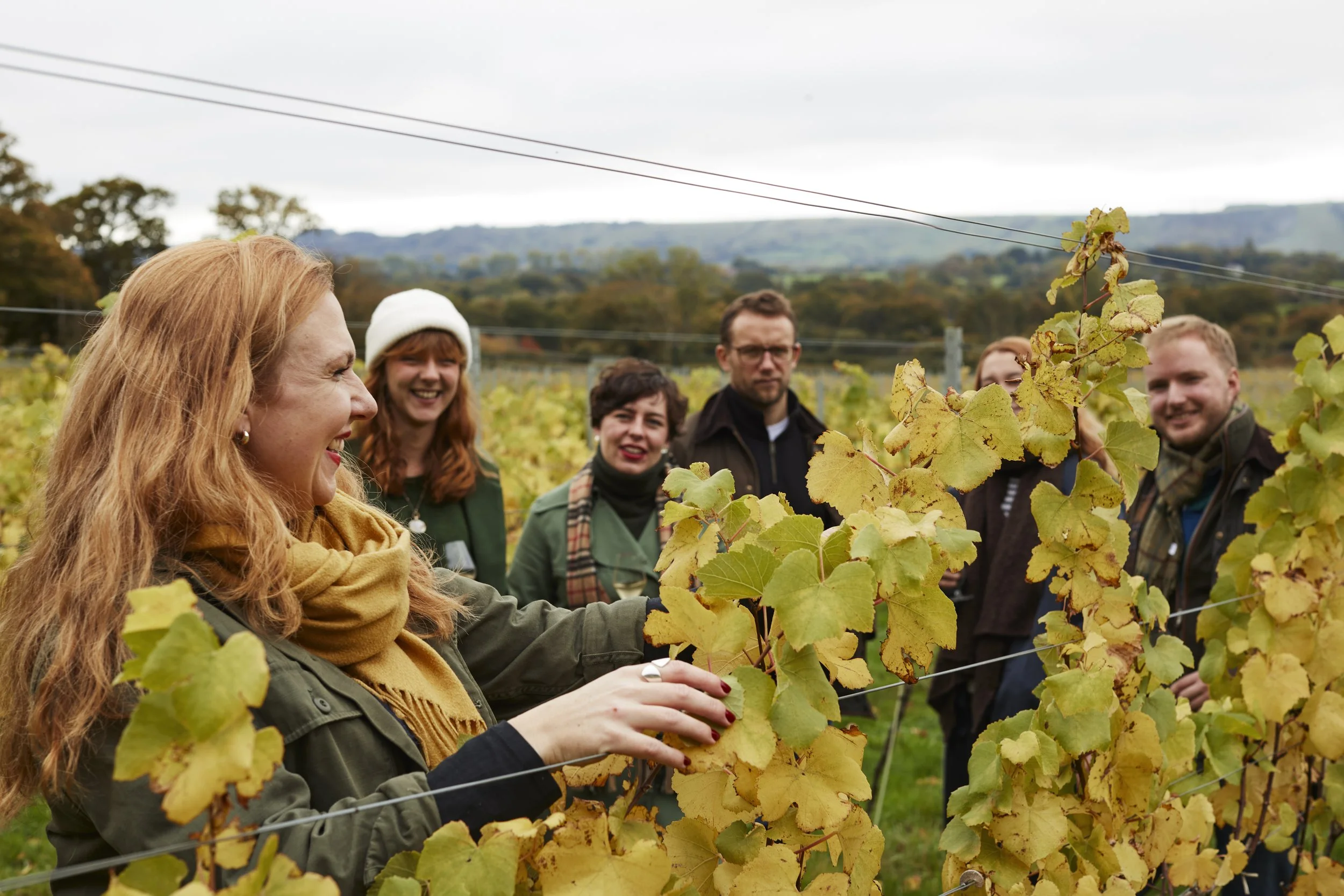
Vineyard tour at Artelium
Sussex Wine Tourism: What Can You Do?
Experience Sussex presents the region as a network of vineyards running from west to east, across the South Downs and the High Weald. Many estates now welcome visitors, making Sussex one of the easiest places in Britain to connect a bottle with the landscape and people behind it.
What can you do?
· Join a vineyard tour or tutored tasting.
· Visit a working winery where access is offered.
· Eat at a vineyard restaurant or enjoy a food-and-wine experience.
· Stay overnight in vineyard accommodation.
· Plan a multi-estate route through Sussex Winelands, the Rother Wine Triangle or the Wealden Wine Trail.
· Combine a vineyard visit with the South Downs, the coast, a gallery, historic house or makers’ studio.

Artelium sparkling wines
Sussex Modern: Art, Landscape and Wine
One of the most distinctive ways to understand Sussex is through the relationship between art, landscape and wine. Sussex Modern brings these themes together and encourages visitors to build their own route between vineyards, cultural venues and beauty spots.
That feels true to the county. Sussex has long attracted artists, writers, makers and independent thinkers. Today, innovative winemaking sits naturally alongside places such as Charleston, contemporary galleries, modernist architecture and the ancient landscape itself.
For Artelium, wine and art are not separate programmes placed next to one another. They are both expressions of human creativity, skill and interpretation. The vineyard gives us a living material. The vintage gives us difference. The finished wine is never entirely repeatable.
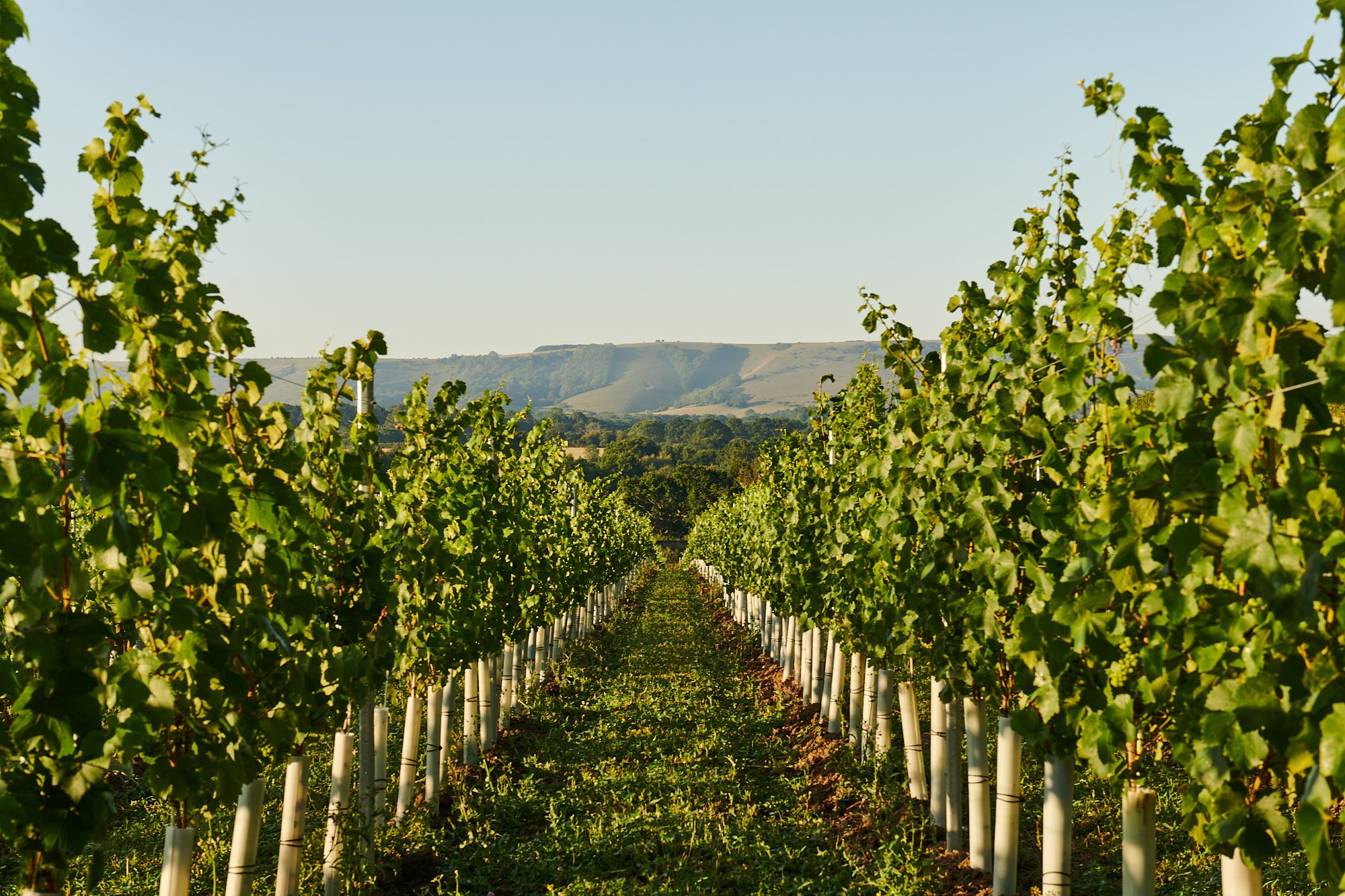
Artelium East Sussex Site
Artelium’s Two Sussex Vineyard Landscapes
Artelium works across two Sussex vineyard sites, Streat in East Sussex and Madehurst in West Sussex. Internal vineyard and wine records reflect the importance of both places within our growing and winemaking programme.
Streat is associated with clay and clay-loam conditions, while Madehurst gives us a different South Downs context. Working across two sites reinforces a simple lesson: Sussex is not one uniform terroir. Its interest lies in the conversations between different soils, exposures, varieties and seasons.
Our wines are vintage-led because we want those differences to remain visible. We grow classic varieties and explore modern PIWI grapes, producing sparkling and still wines that reflect both tradition and the creative possibilities of a young wine region.
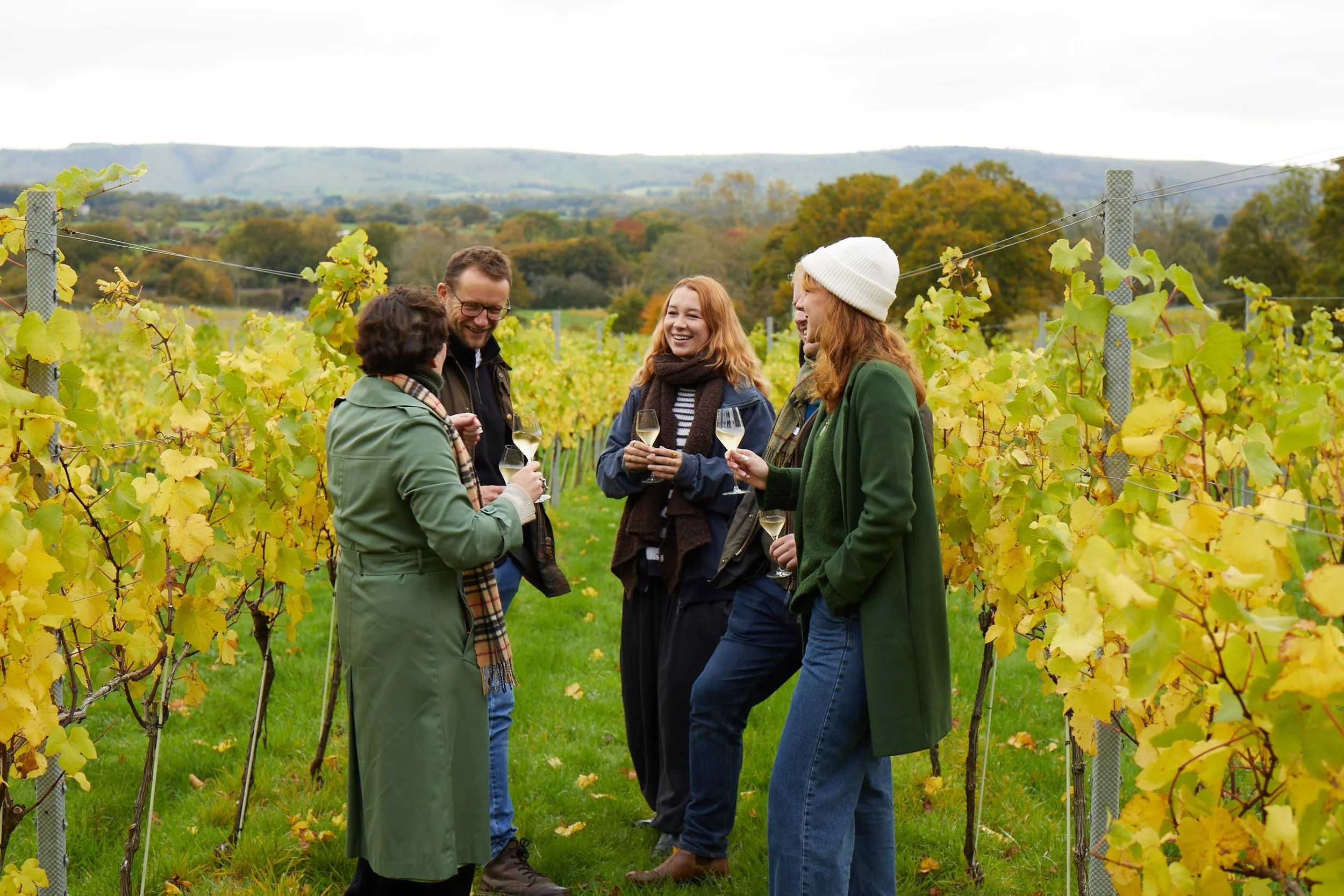
Vineyard tour at Artelium
How to Plan a Sussex Vineyard Visit
Choose your area
Sussex is broad. Plan around one cluster, town or landscape rather than trying to cover the whole county in a day.
Book where required
Tours, meals and special tastings often need advance booking. Check each estate’s current opening details.
Allow time
One thoughtful visit, lunch and a cultural stop can be more rewarding than rushing between several vineyards.
Plan transport
If everyone wants to taste, arrange a driver, taxi, tour operator or suitable public-transport route.
Mix wine with place
Add a walk, gallery, garden, historic house or overnight stay to understand the wider Sussex story.
Visit in different seasons
Budburst, summer growth, harvest and winter each reveal a different side of vineyard life.
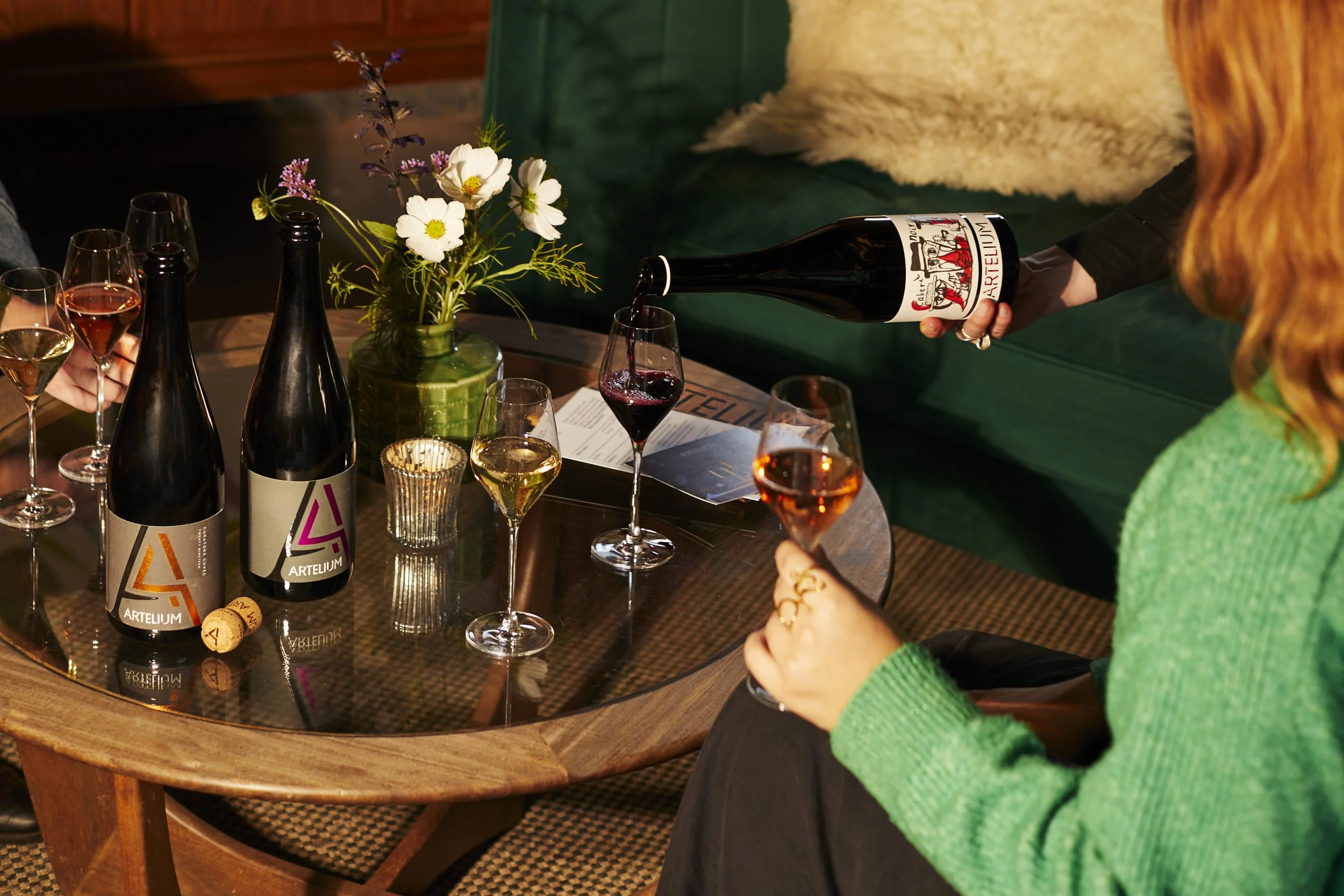
Wine tasting at Artelium Tasting Room
Why Sussex Wine Matters
Sussex shows that English wine can develop not only individual producers, but a genuine regional identity. The protected name gives that idea formal structure. The vineyards and wineries give it substance. The visitor economy makes it tangible. Art and landscape give it cultural depth.
The most exciting part is that the story is still young. Sussex is learning what its different sites can do, how its wines age and which varieties will become most expressive over time. We are not inheriting a finished tradition. We are helping to make one.
Explore Sussex wine through vineyard tours, tastings, seasonal food, contemporary art and the landscape surrounding our Streat home.

Sussex Wine: Key Facts
· The protected Sussex wine area is defined by East and West Sussex.
· The Sussex protected name was registered under the UK scheme on 5 July 2022.
· Current WineGB public guidance lists Sussex Sparkling Wine PDO among the registered UK wine schemes.
· A wine made in Sussex is not automatically a Sussex PDO wine.
· Sussex produces sparkling and still white, rosé and red wines.
· Experience Sussex states that more than a quarter of Britain’s vineyards are in Sussex.
· Sussex Modern connects wine with the county’s art, landscape and cultural destinations.
· Artelium works across vineyard sites at Streat and Madehurst in East and West Sussex.
-
Sussex wine is wine associated with vineyards and production in East or West Sussex. A wine may state Sussex as its region without necessarily carrying Sussex PDO status, so the label and technical information should be checked.
-
PDO means Protected Designation of Origin. Sussex is a registered protected wine name under the UK geographical indication scheme, with a defined area and production requirements.
-
The UK government records 5 July 2022 as the date of registration under the UK scheme.
-
No. A producer must apply for the relevant scheme, and the wine must meet its requirements and assessment. Excellent Sussex wines may also be sold under other permitted classifications.
-
The original Sussex specification refers to Sussex, Sussex Sparkling, Sussex Still and Sussex Origin. Current WineGB public guidance lists Sussex Sparkling Wine PDO among registered schemes. Check the latest government and WineGB scheme documents before making a technical claim about a particular wine.
-
Sussex combines a cool climate, varied soils, suitable slopes and a high concentration of experienced growers and winemakers. Chalk is important, but clay, greensand, sandstone and other soils also contribute to the region’s diversity.
-
Experience Sussex currently states that there are more than 159 vineyards and that Sussex contains more than a quarter of Britain’s vineyards.
-
Chardonnay, Pinot Noir and Meunier are central to traditional-method sparkling wine. Sussex vineyards also grow grapes including Pinot Gris, Bacchus and a growing range of modern disease-resistant varieties.
-
Yes. Sussex producers make still white, rosé and red wine alongside sparkling wine.
-
Yes. Many estates offer tours, tastings, food, events or accommodation. Opening times and booking arrangements vary, so check the producer’s current website before travelling.
-
Sussex Modern is a destination platform connecting the county’s art, landscape and wine, helping visitors create routes between vineyards, cultural venues and outdoor places.
-
Begin with a traditional-method sparkling wine, then compare it with a still Chardonnay, aromatic white, rosé or red. A vineyard visit is one of the best ways to understand how place, farming and winemaking connect.
-
Artelium’s visitor home is at Streat in East Sussex, with vineyard activity also associated with Madehurst in West Sussex. Use the current Artelium visit page for opening and booking information.